Your Cart is Empty




Rodmakers like to talk about tapers in a way that probably seems obsessive to those who aren’t bamboo fanatics, but there’s no getting around how important they are. When you boil it down, a rod’s tapers are sort of like its genetic code (albeit carefully engineered code) which determines how it’s going to perform.

Some tapers have reached more or less canonical status. Most often they were created by a master rodbuilder–a Jim Payne, for example–who refined them over time and then passed them on to other rodmakers who built rods along the same pattern. Others are derivative of these common tapers, where a builder has decided to tweak it slightly, and still others are more experimental, where a builder tries to reimagine the rod’s engineering in order to achieve a particular outcome.
The issue of tapers in general is probably a much larger one that I can take up here, so I want to focus on just one aspect of the taper but one that’s terrifically important: rod tips.
What a fine tip does for you is to act as an “introduction” to the rod and as a medium between the rod and the line. When you think about the physics of casting, the thing that generates the greatest velocity is the tip which is being moved back and forth with considerable speed. If you could place two rods being cast exactly beside one another in tandem — one with very fine tips and one with heavy tips – you’d really see just how much the tips affect the rod action. It’s actually pretty startling. The velocity of the fine tip rod would be much faster, and that the heavy-tipped rod would look slower and clunkier.

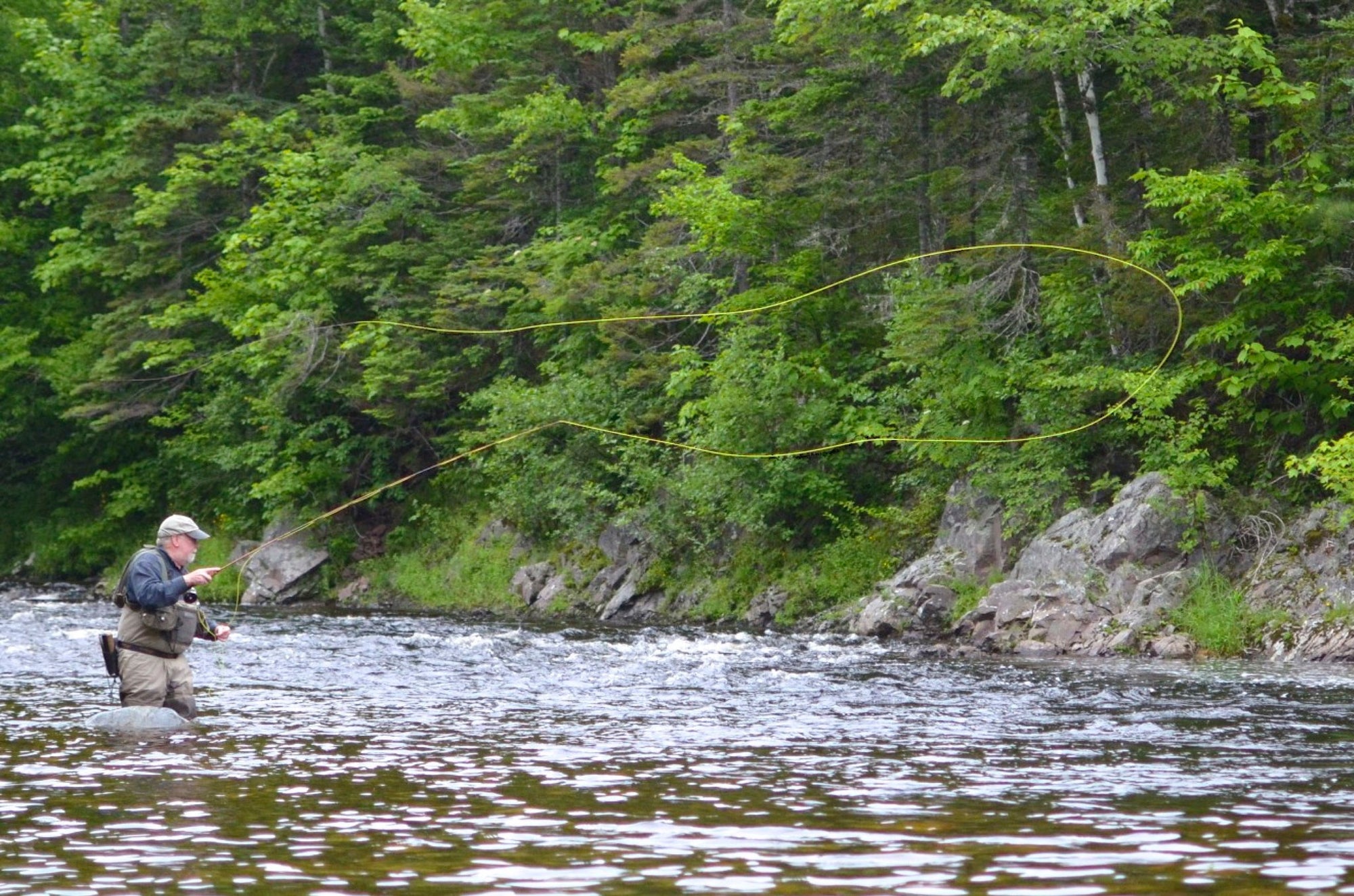
What this means in practice is that a fine-tipped rod is going to let you cast with a very effortless, tight loop. It allows you to almost just flick the upper part of the rod because you can generate more speed with such a truly progressive tip.
One of the reasons why bamboo is often thought of as slow and noodley is because the tips aren’t fine enough on many rods to be able to give them a good, crisp action. A heavy tip means that the rod must load at a slower, more exaggerated pace.
How do you get rods to have fine tips? Usually I tell people that it’s a combination of voodoo and black magic, but the real reason, at least for me, is the quality of the Leonard beveler that I cut my rods on. It’s extraordinarily precise.
Just how fine? I’ve been able to cut individual strips of bamboo to .018” (and I don’t mean .020” or .025”) and I think I could probably go even lower if I could find tip-tops that would be small enough to fit a blank made of those strips. Normally when the strips are glued up my 4-weights are .055” at that tip-top. Normally my 3-weights are from .052” to about .046”.
One concern that I occasionally hear from people when I talk about fine tips is worry that that makes the rod more likely to break. I mean we’re talking about .040” right? And when you’re contemplating paying good money for a bamboo rod it’s certainly a reasonable question to ask.
The best answer I can give to this is one based on experience, which is that I just have never found it to be a problem. I’ve been making rods for nearly three decades and the broken rods I’ve had to deal with have almost all been through thoughtlessness on the part of the angler. I’ve done a lot of field testing over the years experimenting with various tips and the fine ones that I’ve settled on have held up just fine to the daily wear and tear that a rod undergoes.
At any rate, the next time you are looking at a rod or talking to a builder, don’t settle for just asking about the general action. Ask how fine the tips are. It’ll give you a good sense of what you can expect out of it.
Comments will be approved before showing up.