

One of the great things about where I live and work is that there is a considerable amount of fishing tackle history in the area. While we often think of the Catskills as being the epicenter of all things bamboo — it was the home of the Leonard and Payne shops during their heyday, after all — the fact is that New England has also had a number of important fly rod manufacturers over the years. And while they may not have been quite as exalted as Leonard or Payne, New England companies like Chubb, Montague, Sewell Dunton and others, played a large role in helping popularize fly fishing for many Americans.
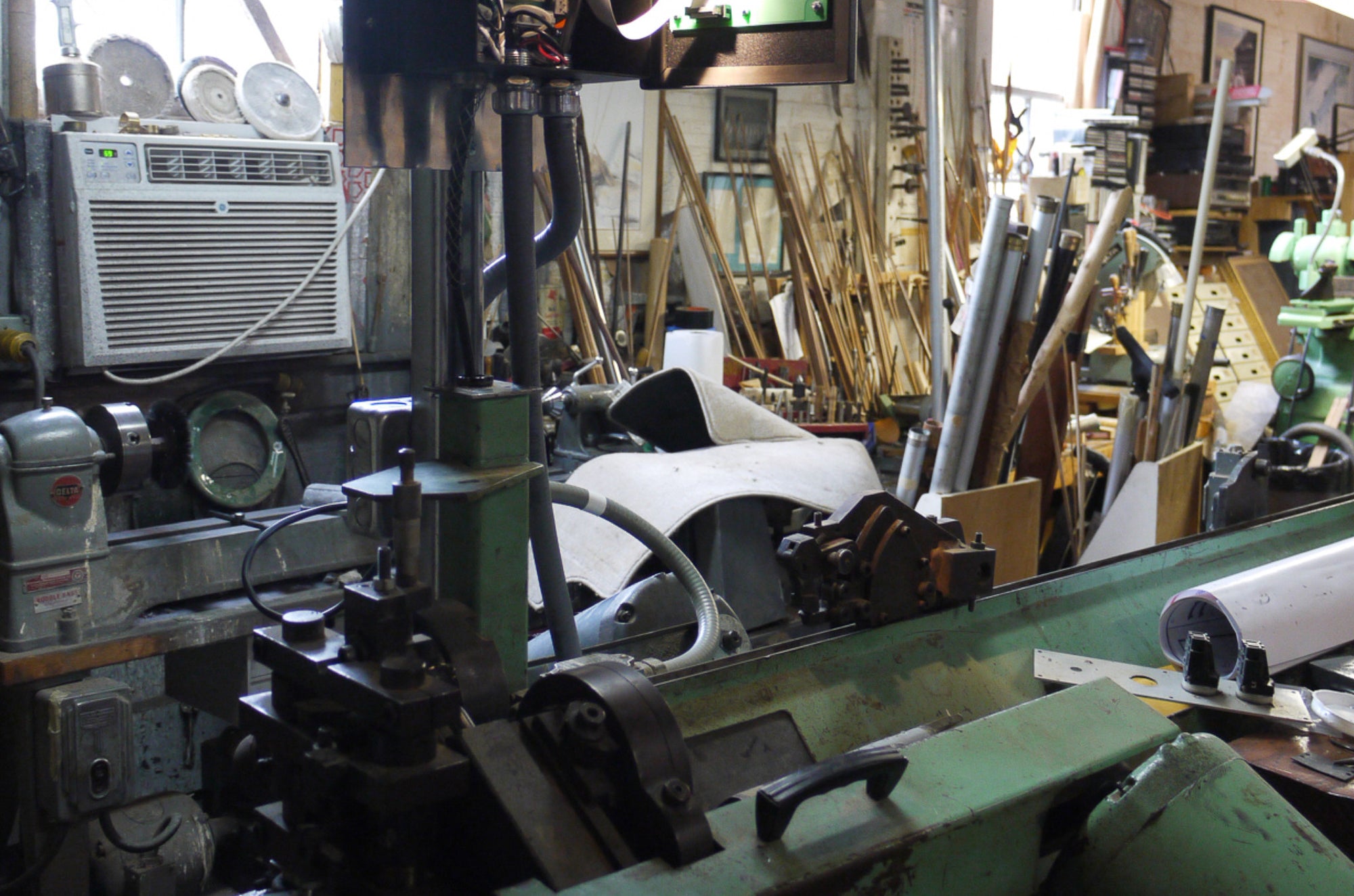
What this also means – and more to the point of this post — is that I often come across interesting pieces of machinery or old tools that were used in some of these early rod shops. The Montague shop, in particular, was located not far from where my shop stands today and so over the years I’ve managed to acquire a few interesting pieces of Montague equipment.
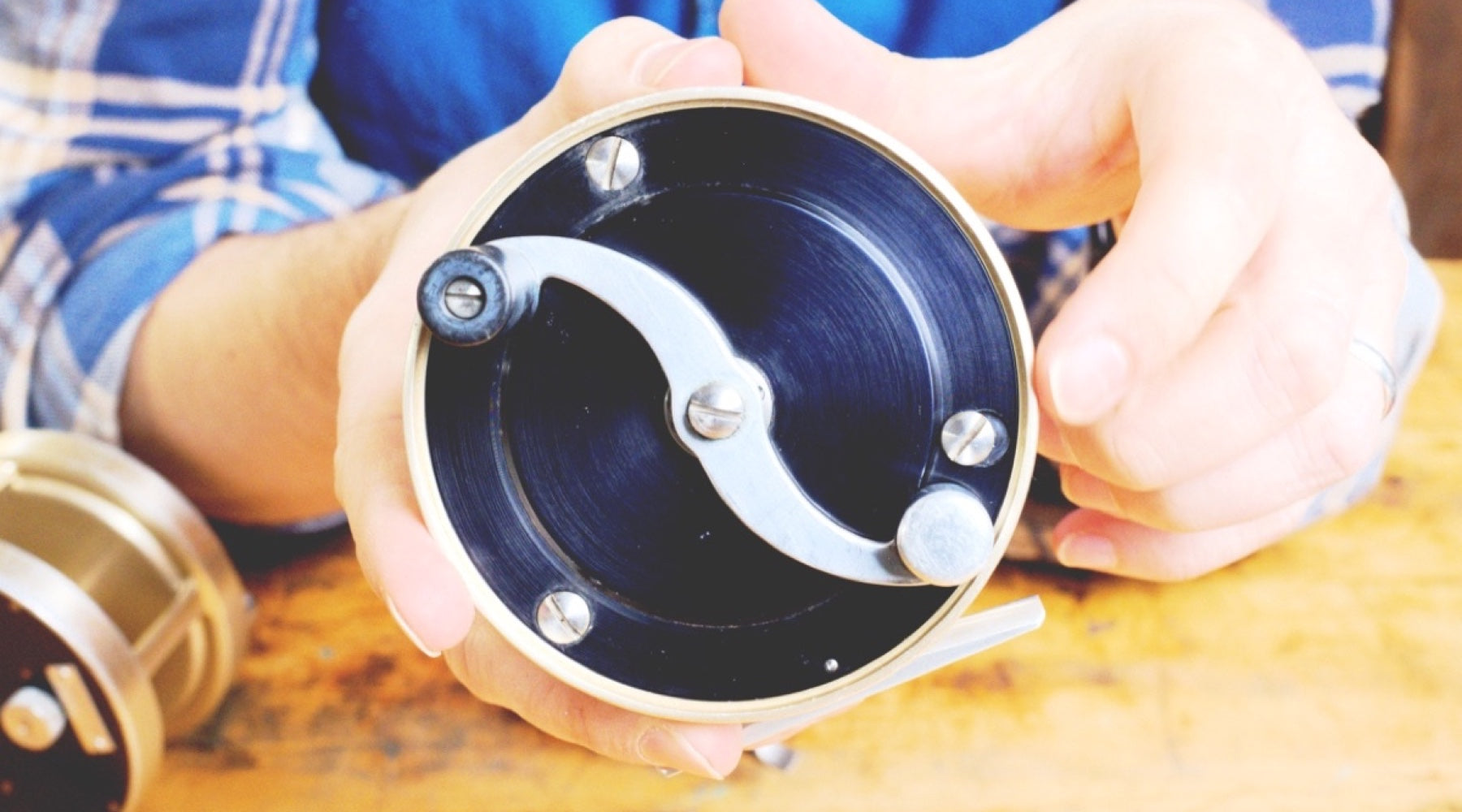
One such piece is this one here, a box designed to help in winding on the silk thread that holds the guides on the rod. It’s a pretty simple but clever design, with spring pressure to keep the spools nice and tight and with enough heft to the box to keep the whole thing good and stable.
I have another winding box that belonged to Tom Maxwell so I don’t use this one for any of my work, but I’ve always thought that it’s a kind of interesting reminder of some of the rodbuilding history in my area of New England.
Thanks to all of those who provided such great feedback about the video I did on making Payne-style acorn caps! It was a fun project and has inspired Junior and I to try and do a few more over the next couple of months (at least if we can get the time!).
One thing that the video also inspired me to do was to retire the tool post I was working with and make a new one altogether. A tool post is a pretty standard piece of lathe equipment and its purpose is to hold whatever tool you’re working with to machine your material. Basic, but pretty important. You can see the piece of machinery I’m talking about in these two photos.
Here I am attaching the tool post to the Lathe.
And here it is being used to apply the knurl to the finished cap. You can see in the photo below that there is a portion of the tool post that is angled up slightly, a problem which I had fixed at an earlier point but which was now breaking again.
Anyway, last week before the Somerest show I managed to carve out a few hours to go ahead and make a new one. Some of the photos below are a little blurry but hopefully you get the idea.
The first basic step involved getting the stock material cut and then machining all of the surfaces so that it squared up nicely. In this photo the new block for the post is in the lower right hand part of the picture.
The next steps involved turning the top so that there was a nice little rise for the handle to bed on, and then milling out the parts of the block to create the spaces for the tools to rest. I machined the slots for the tools so that they were a few thousandths below the center line (which gives you a much better cut when you use a plastic shim) and good for 3/8” tooling (I also machined one that was quite a bit lower that I could use for my knurl holders). The last thing I did during this phase was to machine one slot at a 3 degree incline so that I could easily adjust the height of the tools by sliding it back and forth slightly in the slot and thus raising or lowering the point at which it touches whatever material I’m working on.
Here’s the semi-finished tool-post with all of the slots machined out.
The last step was to machine the holes for the screws that lock each tool in place in the slots. Below you can see the new tool post on the left with the freshly machined slots and holes, and my old (and somewhat battered) one on the right. I’m looking forward to using the new one since I anticipate it being especially helpful with much of my work!
Just a quick reminder that if you haven’t yet signed up for our email list, make sure you do. We’ve got a handful of rods coming in that we’ll be posting in the next week or so and those on our email list will be the first ones notified!
I wanted to take a quick moment to wish you and your families a very happy holiday season. As always I’m deeply grateful for your interest and support for bamboo rods and rodbuilding and I hope you’re looking forward to a happy and prosperous 2012!
So, I hinted a few weeks back that Junior and I had something fun in the works, and here it finally is! It all started because I needed to make some reel seat acorn caps for a rod and so Junior thought it would be fun to bring his camera into the shop and try shooting some video of the process, step-by-step. Neither of us really have any experience with video, but we thought we’d just give it a shot and the result is what you see below. Let us know what you think!
-Marc
Here is a nice still shot from the opening of the video:
It’s been a hectic stretch in the shop (hence the relative lack of posts here lately) but Junior and I took a day during the Thanksgiving break to work on a little side project that we’ve been planning for a while. I’ll spill more about it later but in the meantime I thought I’d leave this photo as a little hint. One the left is a form tool that was made by a friend of Jim Payne’s during the 1940′s and which I use to make acorn caps to go on some of my reel seats. I’ve always loved the way these look and this gives you a pretty clear idea of how they’re machined. More to come later!
Well I finally got back from Danbury earlier this evening and managed to unpack my things and eat a little dinner before getting ready to turn in. I was even too tired to manage a fly or two at the bench!
Danbury, of course, was the site of this year’s Art of the Angler show, an event put on by the Catskill Fly Fishing Center and Museum. It was a great show again this year with good turnout and the chance to see a lot of old friends. Kudos to Jim, Erin, and all of the other CFFCM folks who helped put this on, as well as to all of the volunteers and folks who donated items to the dinner raffle fundraiser.
I managed to snap a few photos of my display case and of the general museum floor which I’ll add below. To see a whole lot more photos from this event, the best thing to do would be to visit the Catskill Museum facebook page which is updated pretty often.
Well the milling machine upgrade is finally working, so I thought I’d post a few photos of it in action. It’s a Hardinge TM-UM that I thought would be great for doing reel seats so I bought it and have been monkeying around with it for the last few weeks trying to get it ready to go. It’s in good shape but as with all new machines (or new to me) it needed a lot of fiddling with in order to get it set up exactly as I wanted it.
Making reel seats is a fairly long process which I can’t really do justice to here, but below are a few shots where the milling machine is involved, just to give you a sense of why its important to have a good quality piece of machinery for this part of the job. Since this is the machine that helps take the raw wood cylinder and gives it the shape of a proper reel seat, it’s not the kind of thing you want to do shoddily with inferior equipment (especially if you’re using very high quality, and often quite expensive, wood).
Anyway, below are some pictures in various stages of the process.
As you can see the cut that the milling machine takes off is what creates the place where the reel foot rests. There is a lot more work though, to get it to where it’s ready to be mounted on a rod and looking a little more like one of these:
Of course sometimes there are other little additions that I’ll do, as with a seat I’m currently working on for a customer. With this seat I took the finished reel seat blank, switched parts on the milling machine, and cut several thin grooves in the seat.
The result is something that looks a little more like this – a seat with some beautiful nickel silver half-rails which I fit into the grooves. Not only do they look nice but they also keep the sliding band up off the finished varnish of the wood spacer. And then it’s ready to finally go on the rod!